
DroneBridge
Creating a long range/low latency/ low-cost digital radio link for UAVs & aerial photography
As my „not just another drone“ project grew very large over the last year I decided to split it up into different articles.
This article focuses on the communication link between a drone & ground station. As no affordable industry solution existed in 2016 I started to create my own. After spending months developing the software I decided to release it under the name of DroneBridge. DroneBridge is a set of modules plus an Android app that should help to make MultiWii (Betaflight/Cleanflight/iNav) and MAVLink based flight controllers more suitable for aerial photography. It aims to be a real alternative to solutions like DJI Lightbridge or OcuSync.
DroneBridge runs on a Raspberry Pi and uses the Pi camera module to deliver an HD low latency video feed over more than 2 km. It uses wifi hardware and patched drivers to push the hardware to its maximum. As a receiver, any Linux based computer can be used. It is recommended to use a Raspberry Pi as well since there are ready to use DroneBridge images for it.
While DroneBridge is designed as a UAV data link it is not limited to that single use-case. It is completely open and easy to use (thanks to a common library that handles all of the connection stuff) and perfectly fitted to handle any kind of data. Use it whenever you need high data rates (1-54Mbit), high range (0.5 – 35 km) and low latency (~110 ms for video).

You can find the most current source code of DroneBridge here:
Update on Beta v0.6 release
The new release will have a common library for C/C++ and Python3 that enables everyone to easily develop their own implementations. The DroneBridge common library gives quick access to the DroneBridgte raw protocol, encryption & software diversity functions used by the modules.
Why build DroneBridge?
The EZ-WifiBroadcast project has come a long way and is very good at delivering low latency video over long distances. Since release 1.5 there also is the possibility to send RC signals. Without this, the user is forced to switch to 5.8 GHz for video transmission to not interfere with the radio control that usually operates at 2.4 GHz. With video over 5.8 GHz, the range gets halved.
However, it got a lot of shortcomings in terms of documentation and usability. Also, I wanted to add new features and allow others to easily integrate their own code etc.
Instead of trying to fix all these issues I decided that it is better to start an entirely new project and rewrite almost all of the code. By sticking to the base image provided by EZ-WBC I can take advantage of all the driver and OS modifications that were made.
The goal is to build a complete system that works with common UAV hardware. It must be easy to configure and use and capable of enabling low latency video, telemetry, RC and MSP/MAVLink two way communication.
An RC implementation that has more than eight channels, works perfectly with popular hardware and mimics a standard radio control including failsafe. Everything should be easy to configure using an app that acts as the UI for the whole system (drone & ground station)
One open system. A cheap and almost ready to fly solution for UAVs of all kind.
DroneBridge for Android: What can it do?

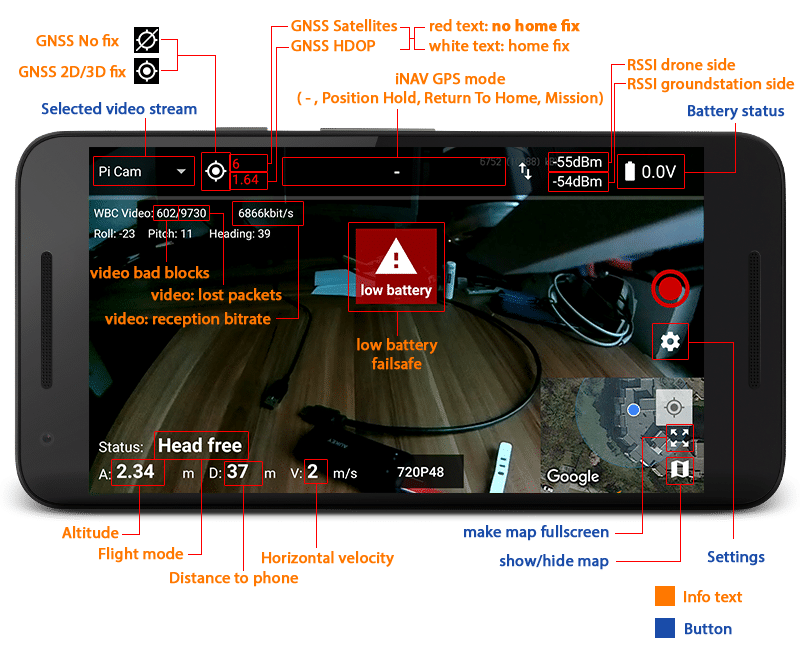
Display important information using an android app including:
- RSSI of drone & ground station
- low latency live video delivered by the WifiBroadcast project (~112 ms glass to glass latency)
- Monitor autonomous missions (LTM & MAVLink telemetry)
- Positions on a map including operator, drone and home point
- All kinds of telemetry information
- allows sending any MSP/MAVLink command to the flight controller
- display battery status (voltage, cell voltage, percent using a battery model)
- allows changing wifibroadcast settings (frequency, FEC etc.)
- allows configuring DroneBridge settings
Modular design & custom protocols

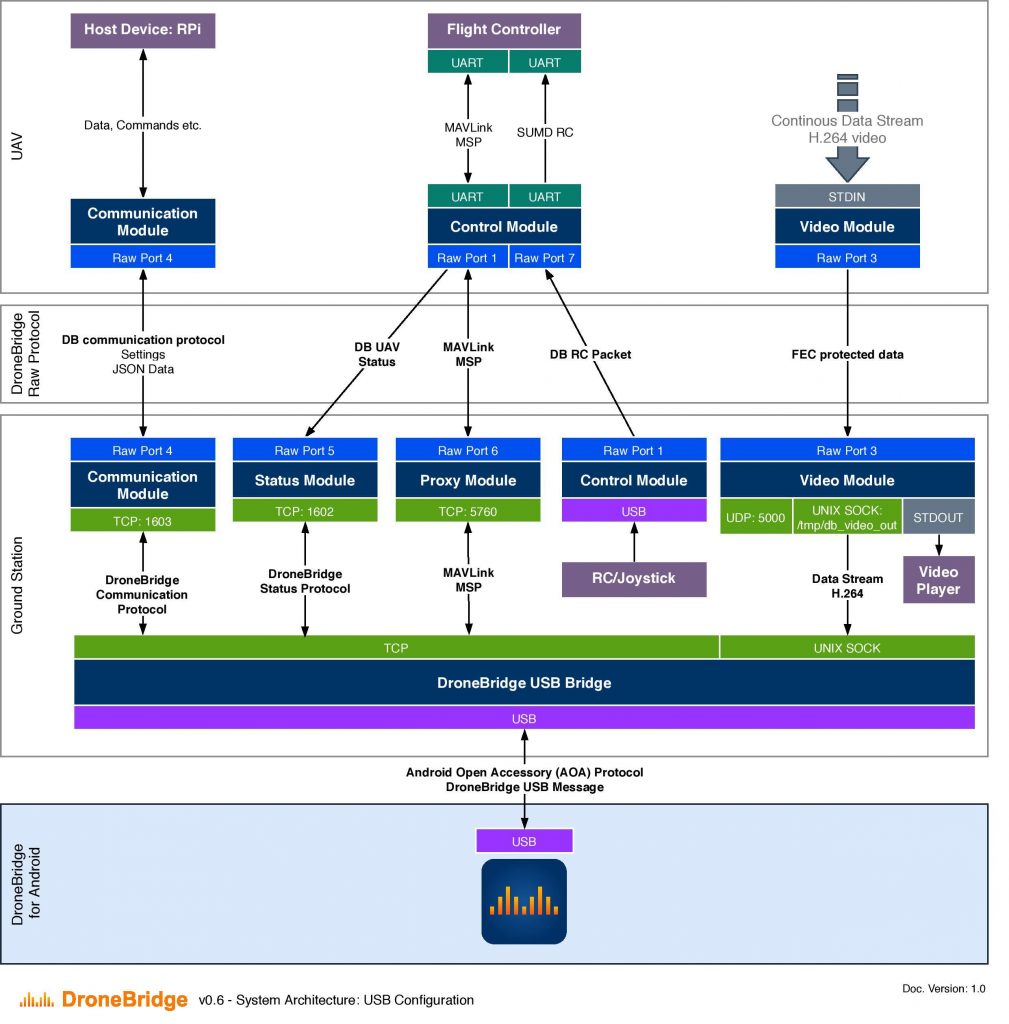
With DroneBridge one can send any MSP or MAVLink command directly to the flight controller. For example commands like:
- Calibration of MAG and ACC
- RC
- Autonomous missions
- PIDs
- Rates
Hardware options
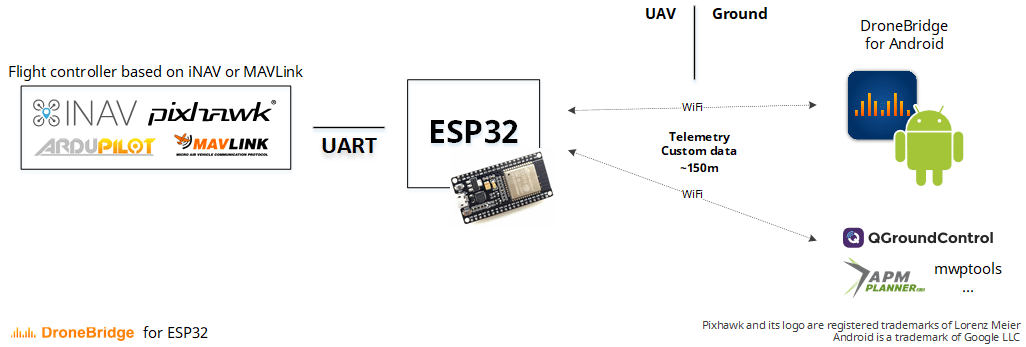
DroneBridge features support for the Raspberry Pi and the cheap ESP32.
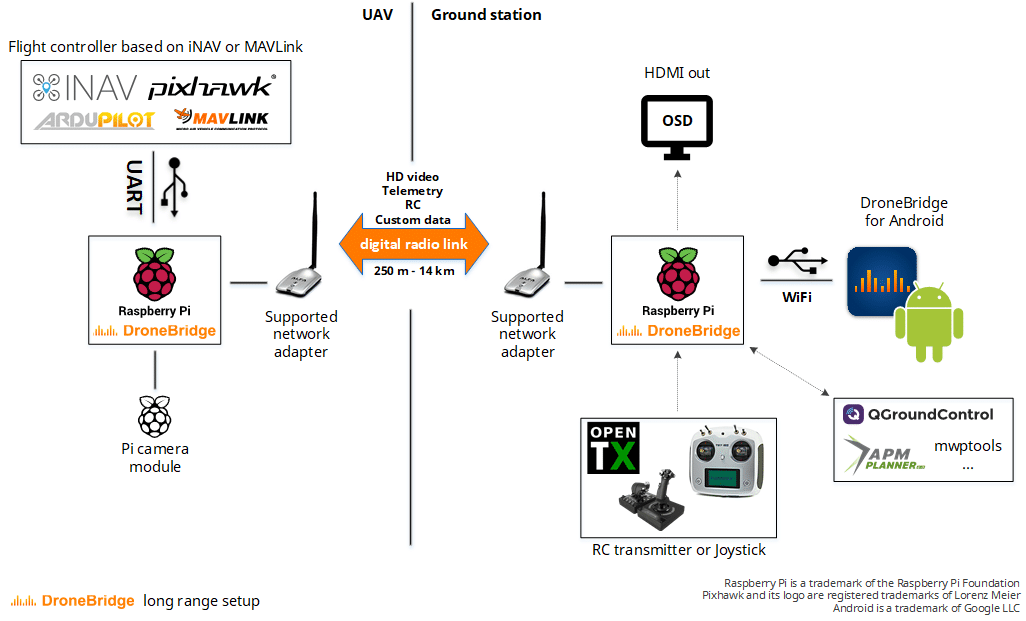
While the ESP32 only gives about 150m of range it is a cheap & easy way of getting started. Its meant for small & light builds and is supported by DroneBridge for Android out of the box. In the future users can create, edit and upload missions via the app.
Get DroneBridge for ESP32 here
Range test
The range was tested using:
- DroneBridge v0.6 Beta (nightly/developer build)
- Sender: 1x AWUS036NHA with a 3 dBi
omni -antenna - Receiver: 1x TP-Link TL-WN722N v1.1 with a 5 dBi
omni -antenna - Frequency: 2447 MHz
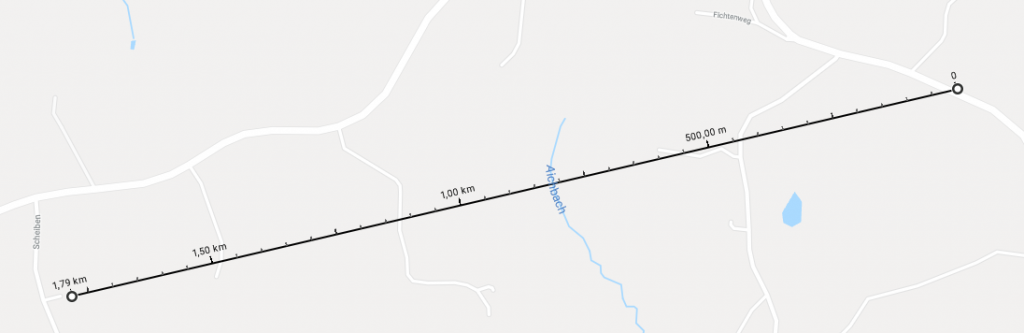
- Distance: 1,8 km
- Data rate: 18 Mbit
- Video/Payload data rate: ~6 Mbit
- Rural area, direct line of sight, ~same elevation, few valleys in between TX & RX
- No bi-directional data was sent (RC implementation was not tested)

Results:
About -75 ~ -77 dBm signal strength depending on the accurate orientation of the receiving antenna. Packet-loss was around one packet per second. With a diversity setup on the receiving side, the packet-loss could be further reduced. Looking at the signal strength I think a few more meters could be gained so two kilometers seem to be the maximum you can get out of the card-antenna combination.